Riyadh Plants
Bottle Tree, boudret al afreet
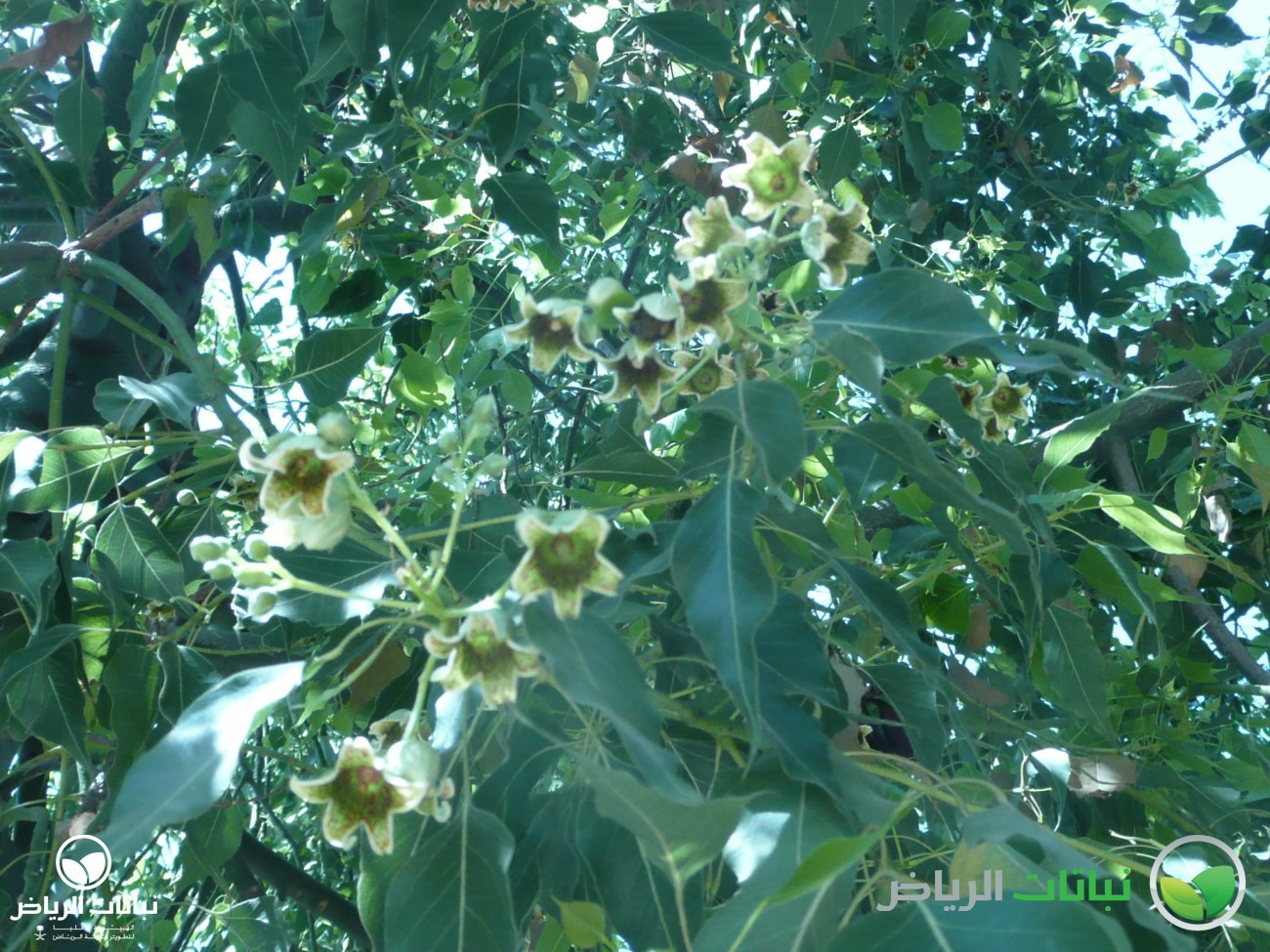
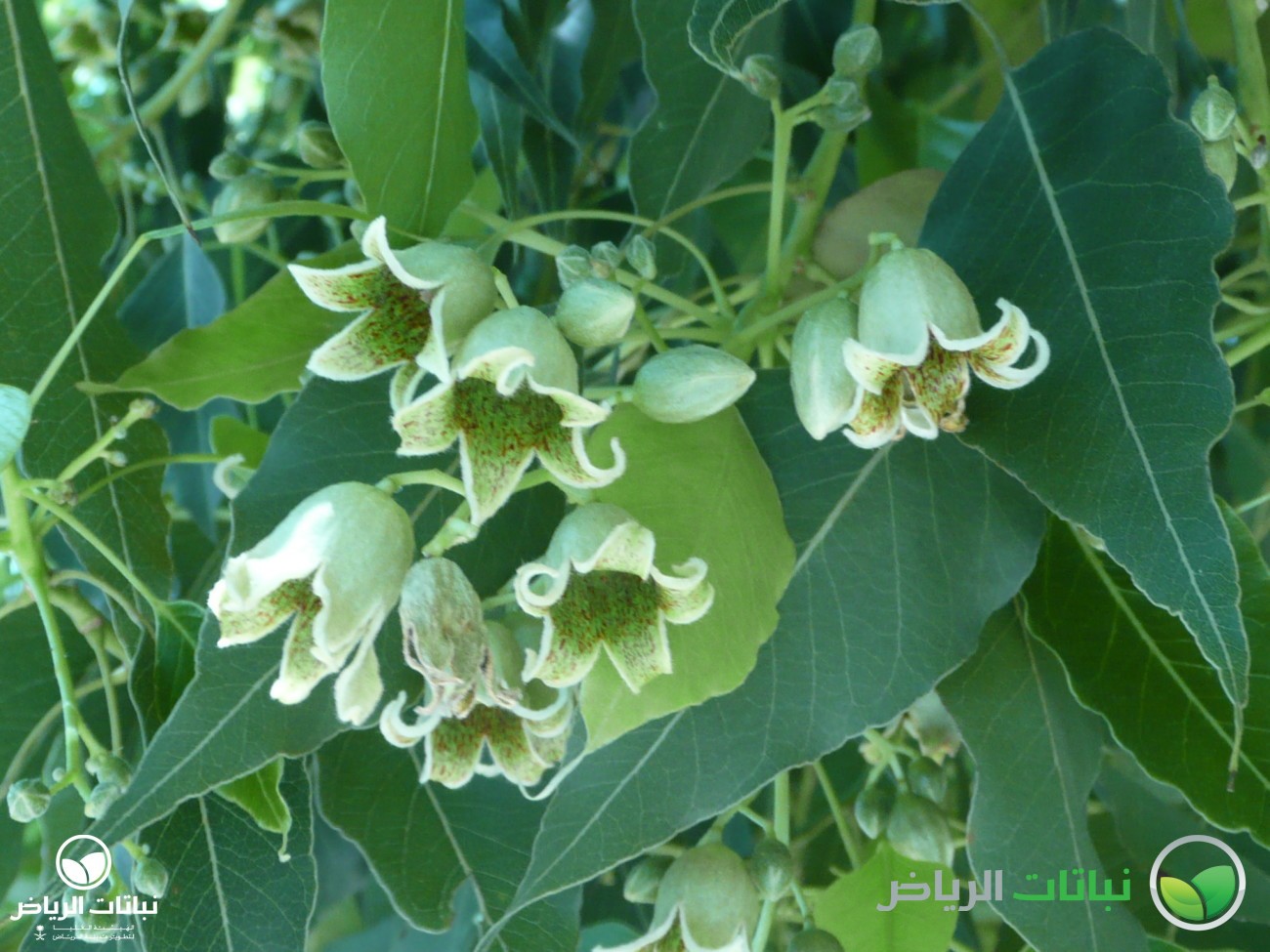
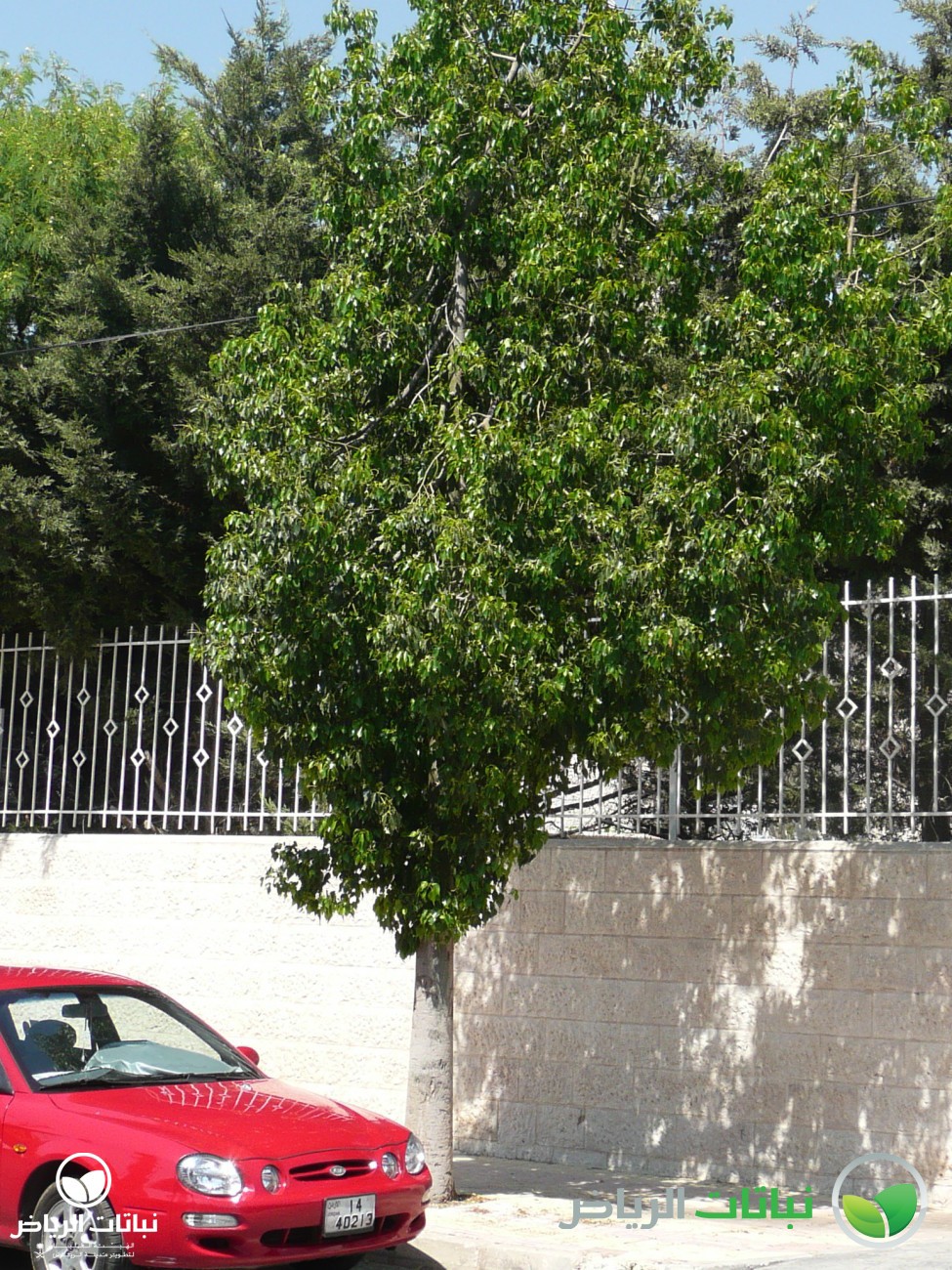
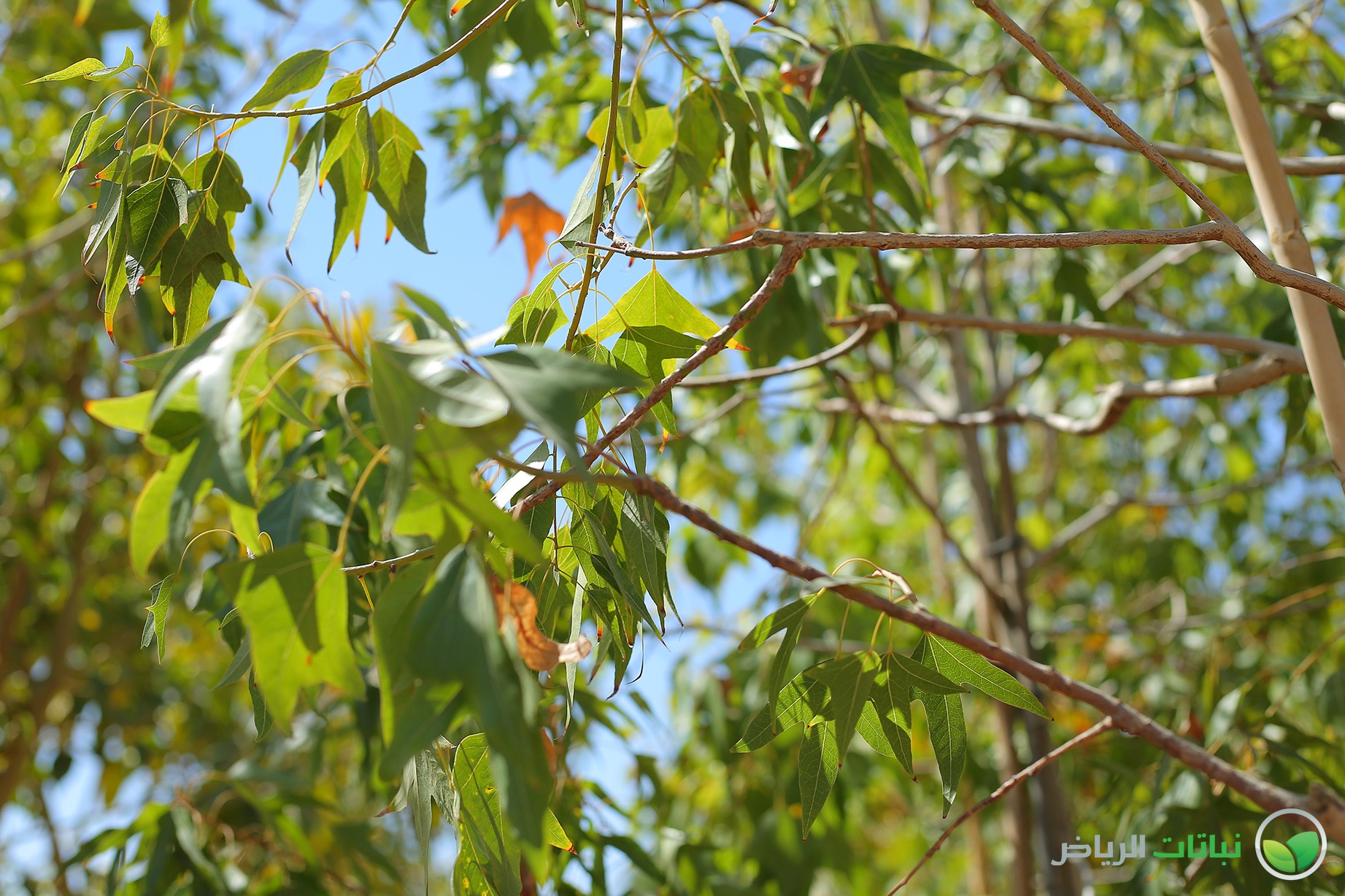
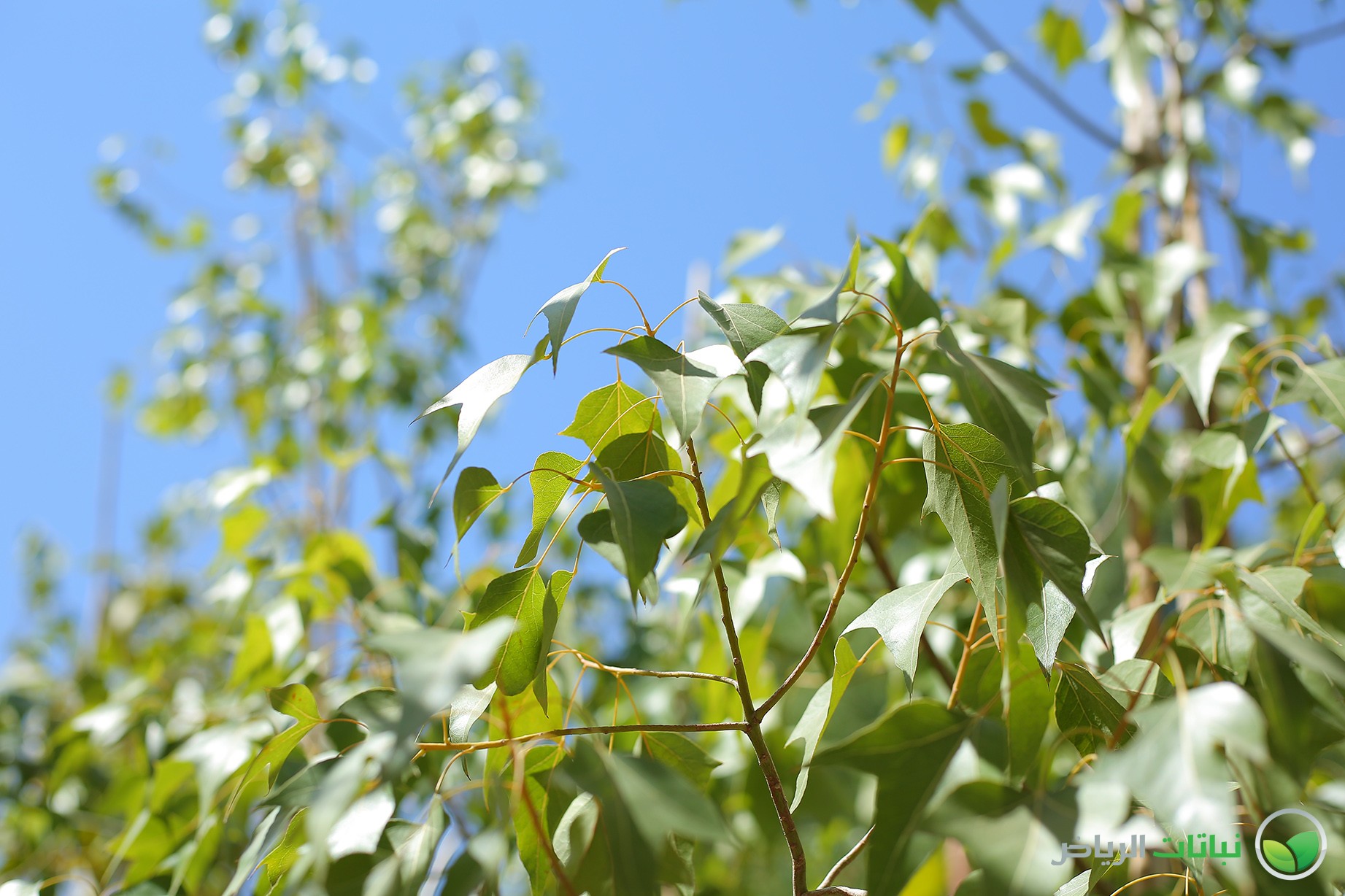
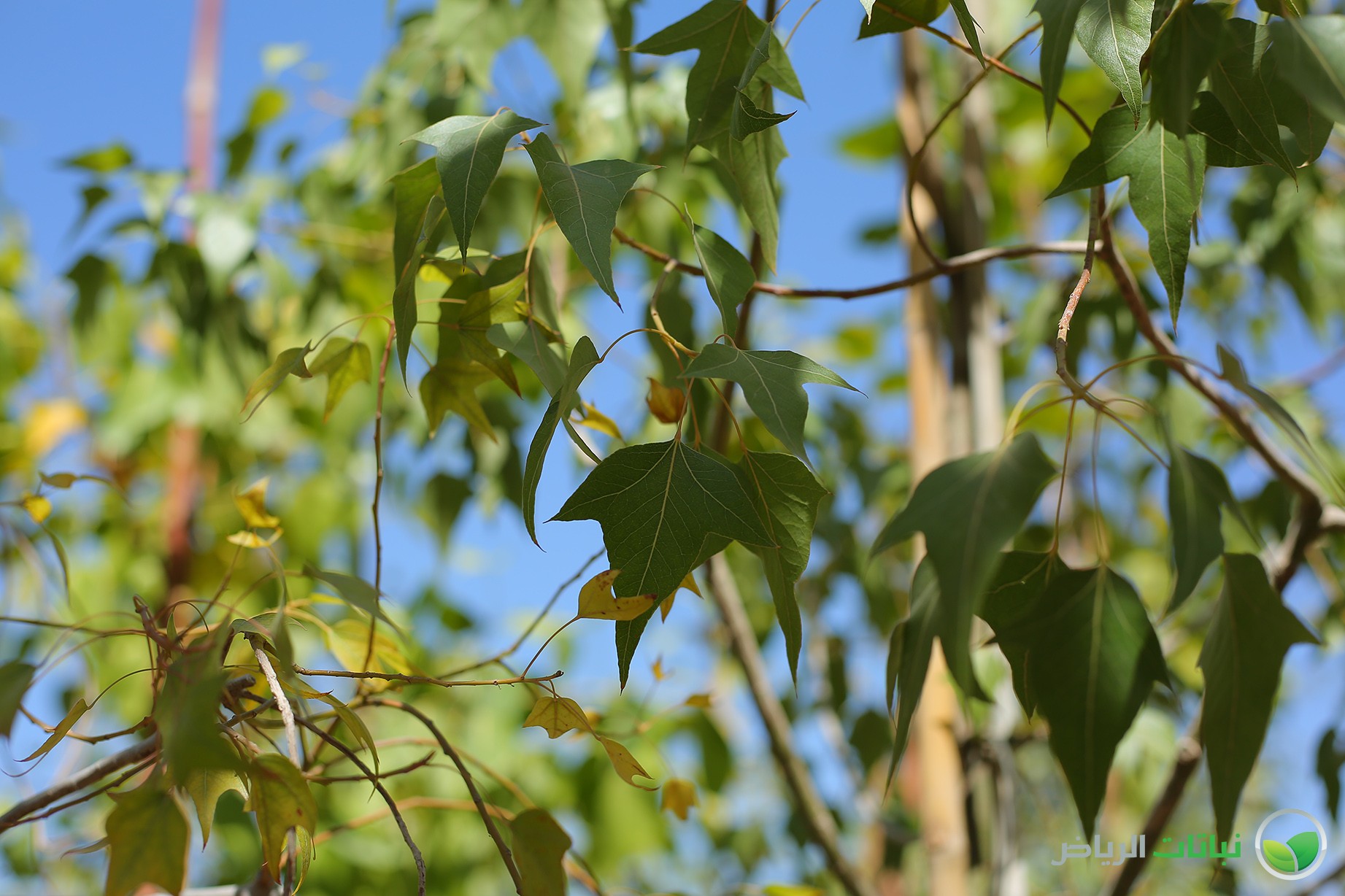
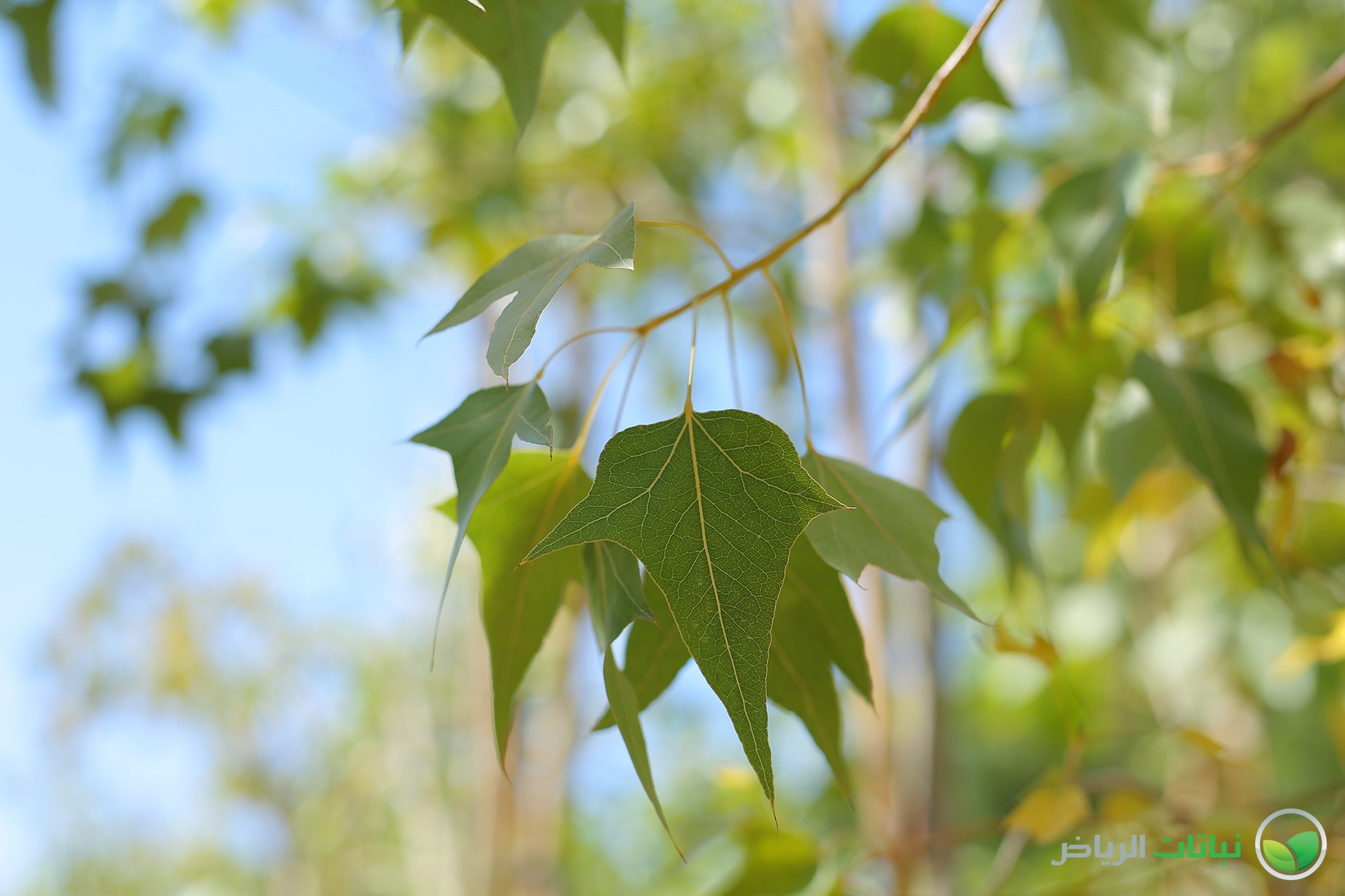
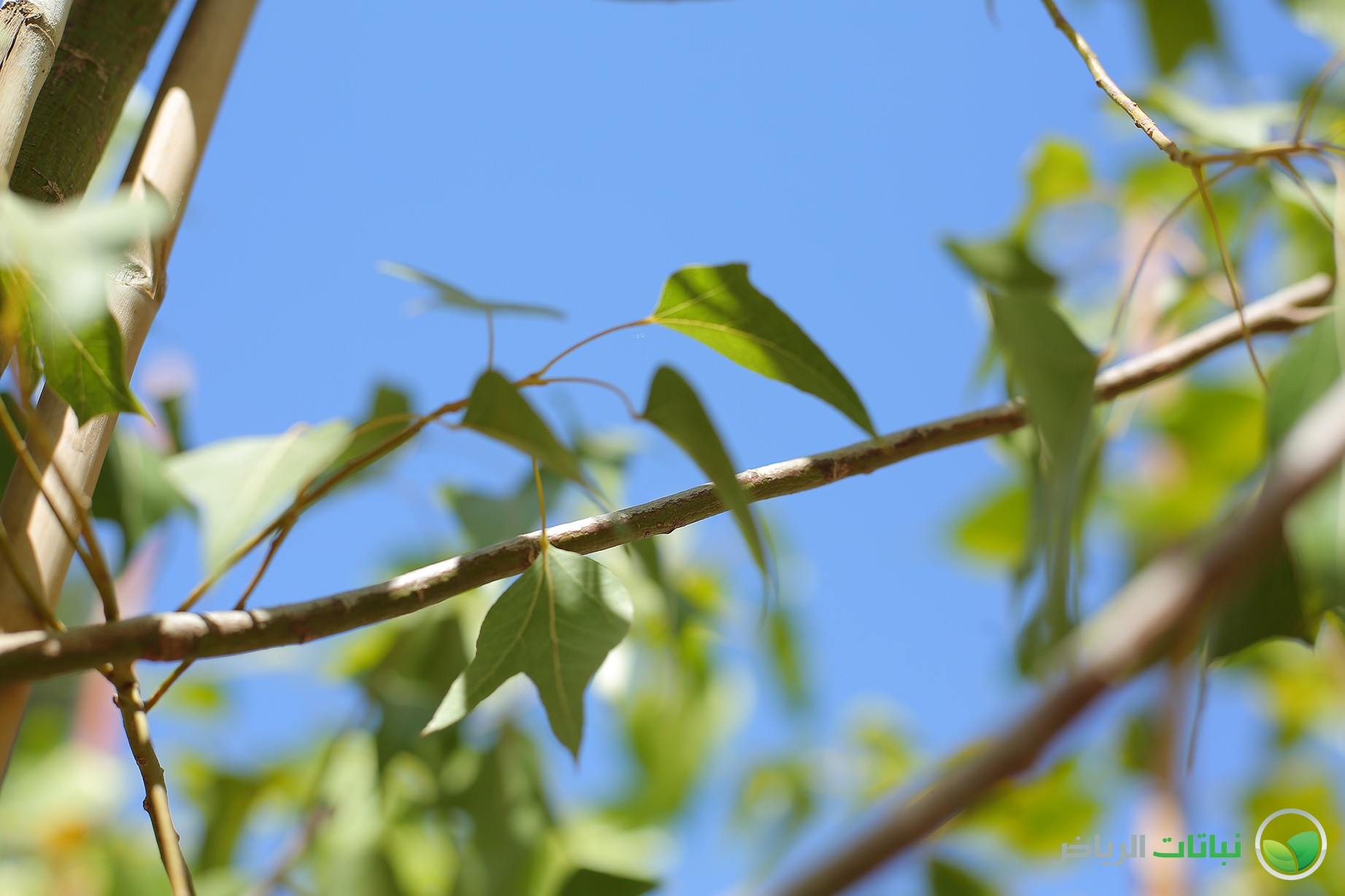
This Brachychiton is more drought-resistant than B. acerifolius. It tolerates full sun and a hot desert climate, just like in its native country, the semi-arid inland of eastern Australia. Trees are found growing there amongst rocks of granite or limestone, but also thriving in deep soil. Narrow and pyramidal when young, the plant’s name refers to the widened base of the trunk which is an adaptation for storing water during prolonged periods without rainfall. On the other hand, it responds well to irrigation by growing faster. It may reach 10 metres easily, while 20 metres are to be expected only in its native environment. Known in Arabic as boudret al afreet, it is often seen in Arriyadh, where the shiny, bright-green fluttering leaves provide a lush effect. The green bark is smooth and attractive. They allow distinguishing two subspecies; Brachychiton populneus ssp. populneus has reduced lateral lobes, while three or five lobes create the palmate leaf of ssp. trilobus. Both subspecies have flowers in light yellow with purple centre appearing in spring. Cultivars may also flower in pink or red. Stagnant water is one factor to avoid definitely, hence soil should drain well. This tree blends in well in desert landscapes, creating dense shade. Not many trees do as well in lawn areas as the Bottle Tree. The root zone should be soaked thoroughly every couple of months in summer. It survives in an urban microclimate, but the littering fruit and annoying itchy hairs limit it to area where the dry pods do not affect passers-by.